
How it's built
A lakehouse of open tables, a typed ontology, transactional actions and governed agents, under one access model
- 1Apps and agentsoperations view · phone view · assistant · agent runtime · model gateway
- 2Actions and writebackconditions · transactional commit · outbox · automations
- 3Ontologyobject types · links · edits · object query · functions · simulation · search
- 4Dataraw · gold · objects · ops tables · pipelines · checks · branches
- 5Connectors and edgedatabases · REST · OData · Kafka · mail · files · OPC UA · MQTT
- 6Your systemsERP · maintenance · point of sale · lab · carriers · email
- 7Access and auditaccess labels · row policies · hidden fields · on behalf of · SHA-256 audit chain · OIDC sign-on
Python · FastAPI · Delta Lake · DuckDB · Apache Spark · lakeFS · Server-sent events · OpenID Connect · Claude Opus 5.5 · Claude Haiku 5.5
Architecture
Four planes, one Python service. Every screen and agent reads objects and writes through transactional actions
Select a component to see what it does and the code that runs it
One request path for every screen and agent
One access model, one audit trail and one writeback path serve everything
Swipe sideways to see the whole map
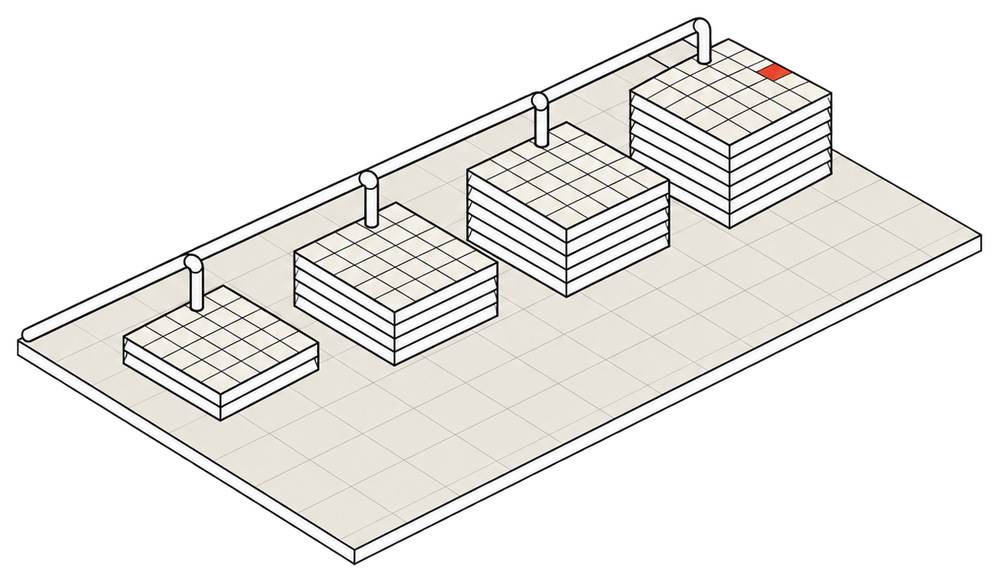
The data layer
Every source lands as an open Delta table, checked, versioned and kept with full history
- Storage
- Delta Lake on Parquet, in a local folder, S3 or MinIO
- Writes
- delta-rs with conditional puts, so several writers commit safely without a lock service
- Reads
- DuckDB scans the same tables. A pipeline step can run in Spark instead
- Change feed
- On for every table, so sync reads only what changed since the version it last applied
- Pipelines
- SQL steps merged by key, with row and output expectations. Builds are atomic
- History
- Time travel to any version, and data branches in the lake or lakeFS
- Connectors
- MySQL, SQL Server and other databases, REST with OAuth2, OData v4, Kafka, IMAP mail and file drops
pipelines:
  - id: fleet
    name: Fleet, flying and installed equipment
    owner: Maintenance control systems
    schedule: every 15 min
    steps:
      - output: gold.stations
        key: code                   # outputs merge by key, so the change feed shows real updates
        inputs: [raw.ops_stations, raw.mis_work_orders]
        sql: |
          with wo as (
            select station, count(*) as n
            from raw.mis_work_orders
            where status in ('OPEN', 'IN_PROGRESS', 'AWAITING_PARTS', 'PLANNED')
            group by station)
          select st.station_code as code, st.station_name as name, st.city, st.province,
                 case st.station_type when 'BASE' then 'Base' else 'Line' end as stationType,
                 {'lat': st.latitude, 'lon': st.longitude} as position,
                 coalesce(w.n, 0) as openWorkOrders
          from raw.ops_stations st
          left join wo w on w.station = st.station_code
        expectations:
          - { name: One row per station, check: "count(*) = count(distinct code)", onFail: fail }
          - { name: Known station type, row: "stationType in ('Base', 'Line')", onFail: fail }
          - { name: Coordinates in eastern Canada, row: "position.lat between 42 and 52 and position.lon between -80 and -50", onFail: warn }
-- Any table, as it stood at an earlier version, from any engine that reads Delta
SELECT fleetNumber, status, hours
FROM delta.`s3://your-lake/objects/aircraft`
VERSION AS OF 1842
WHERE status = 'AOG';-- The platform's own records are tables too
SELECT occurred_at, action_name, object_title, actor_name, agent, approved_by, writeback_status
FROM ops.action_log
WHERE occurred_at > now() - INTERVAL 7 DAY
ORDER BY occurred_at DESC;The ontology layer
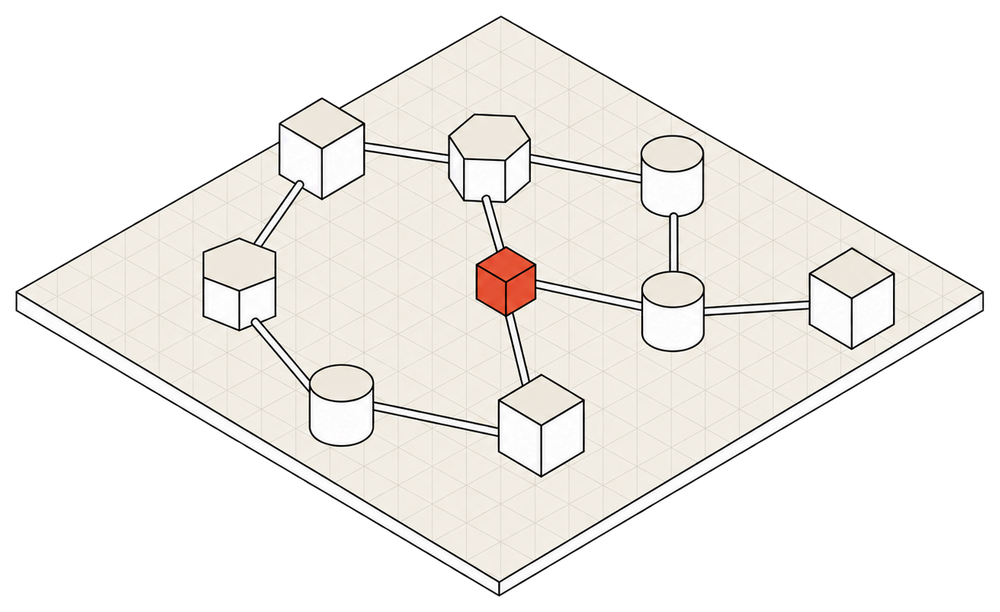
Rows become typed, linked objects, synced from the lake and queried with permissions at every hop
- Object store
- One typed Delta table per type, keyed and versioned per object
- Sync
- Change feeds applied in order and idempotently, so a retry is safe
- Queries
- Filters, up to three link hops and aggregates, compiled to one parameterized DuckDB statement
- Search
- Keyword and semantic search, with embeddings computed on our own machines
- Push updates
- Server-sent events from the change feeds and the audit log, resumable on reconnect
- Model changes
- Branch the model, preview on a data branch, review, merge
objectTypes:
  aircraft:
    name: Aircraft
    key: fleetNumber
    title: "{fleetNumber} · {registration}"
    backing: gold.aircraft            # columns map to properties
    conflictPolicy: preferEdit        # edits win until the source agrees
    properties:
      fleetNumber: { type: string }
      status: { type: string, values: [In service, AOG, In check, Stored] }
      hours: { type: double, unit: h }
      position: { type: geopoint }
  part:
    properties:
      unitCost: { type: double, unit: CAD, hiddenFrom: [line-technicians, auditors, operations] }

linkTypes:
  engine-aircraft: { from: engine, to: aircraft, via: fleetNumber, name: installed on, reverse: engines }
POST /api/v2/query
{
"query": {
"from": "aircraft",
"where": { "status": "AOG" },
"steps": [
{ "follow": "defect-aircraft" },
{ "where": { "severity": { "$in": ["No-go"] } } },
{ "derive": { "daysOpen": "hoursOpen / 24" } }
]
},
"select": ["defectId", "description", "daysOpen"],
"orderBy": [{ "property": "reportedAt", "direction": "desc" }],
"pageSize": 50
}from mso_client import Client
mso = Client('https://ontology.example.com', user='mc.lee')
grounded = (mso.objects('aircraft')
.where({'status': 'AOG'})
.follow('defect-aircraft')
.where({'severity': {'$in': ['No-go']}})
.page(page_size=50))from mso.registry import function
@function(description='Hours and cycles left before the next limit',
inputs={'fleetNumber': 'string'}, output='struct')
def remaining_life(ctx, fleetNumber: str):
a = ctx.get('aircraft', fleetNumber) # reads under the caller's permissions
comps = ctx.linked('aircraft', fleetNumber, 'component-aircraft')
...The action layer
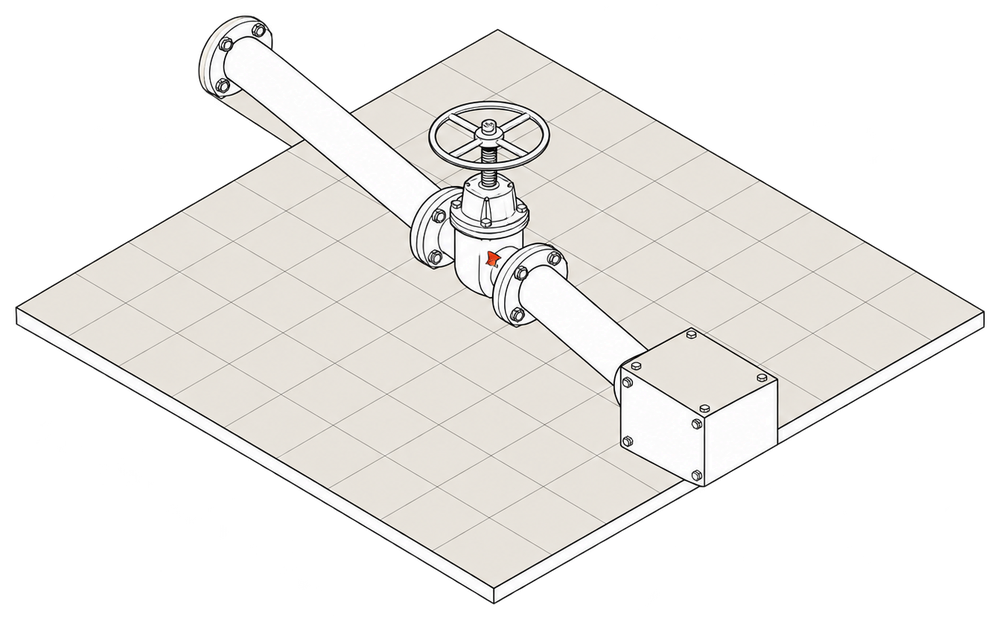
Nothing changes except through an action: typed, permissioned, transactional, written back and audited
- Check
- Validates parameters, conditions and groups, and commits nothing
- Run
- One serialized transaction per action, so two never interleave
- Propose and approve
- Agents and automations propose. The approver runs it, and the proposer is credited
- Writeback
- Transactional outbox: idempotency keys, retries, dead-letter state
- Integrity
- Conditions re-checked at commit, so two runs can’t book the same thing
- Automations
- Object, threshold or schedule triggers. At-least-once, deduplicated per object version
- Functions
- Python or TypeScript under the caller’s access, TypeScript in a sandboxed Node.js process
actionTypes:
  ground-aircraft:
    name: Ground aircraft
    objectType: aircraft
    allowedGroups: [maintenance-control, certifying-staff]
    requiresApproval: true                   # agents may only propose it
    parameters:
      aircraft: { type: object, objectType: aircraft, required: true }
      reason: { type: string, required: true }
    conditions:
      - name: notAlreadyGrounded
        message: "{{aircraft.fleetNumber}} is already {{aircraft.status}}"
        all:
          - { left: { parameter: aircraft, property: status }, op: isNot, right: AOG }
    rules:
      - modify:
          object: { parameter: aircraft }
          set: { status: AOG, statusReason: { parameter: reason }, statusSince: { now: true } }
    writeback:
      - { system: maintenance, operation: set-aircraft-status, payload: { fleetNumber: { parameter: aircraft }, status: AOG } }
automations:
- id: ground-on-defect
owner: mc.lee # effects run as this person
trigger: { kind: objects, objectType: defect, on: [added], where: { severity: No-go } }
effect:
kind: propose # propose | function | agent | notify
action: ground-aircraft
parameters: { aircraft: "{{object.fleetNumber}}", reason: "Defect {{object._key}}" }
attempts: 3
onFailure: { kind: notify, group: maintenance-control, message: "{{automation.id}} failed: {{error}}" }POST /api/v2/actions/ground-aircraft:run
{
"parameters": { "aircraft": "402", "reason": "No. 2 starter-generator failed" },
"options": { "dryRun": true, "includeEdits": true }
}The agent layer
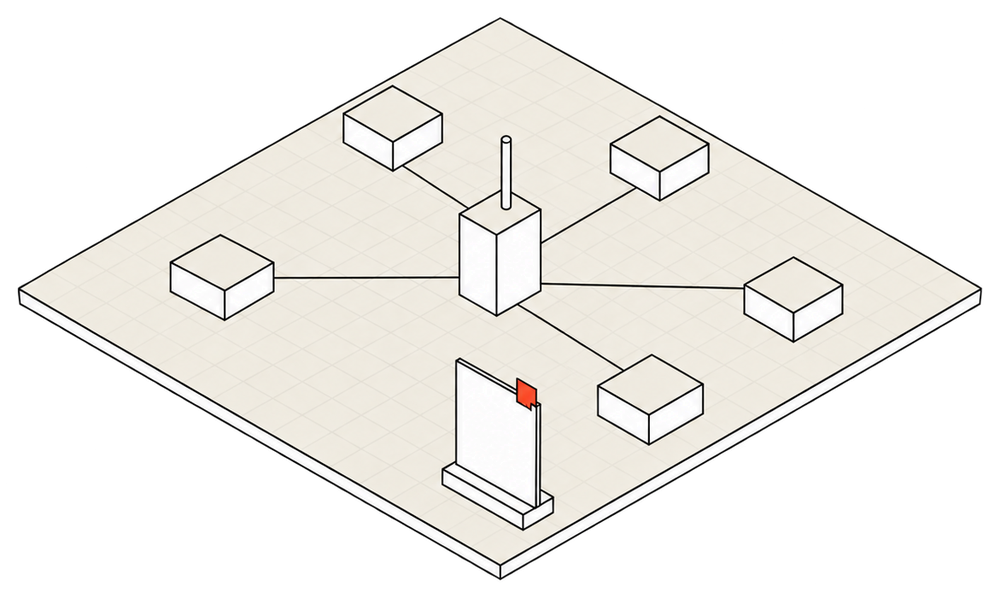
Agents use the same objects, actions and permissions as people. They propose; a person approves
- Step loop
- Each step asks the model gateway for the next move. Tools are ontology operations
- Model gateway
- Claude Opus 5.5 and Claude Haiku 5.5 by default, or OpenAI. Tiered routing with budgets per tenant
- Traces
- Each step is kept with its parent and its effect
- Redaction
- Personal data is swapped for placeholders before a call leaves and restored in the reply
- Evaluations
- Agents and AI functions are tested against known cases before a new version is used
- Trained models
- Classifiers, regressions and P10, P50, P90 forecasts, backtested and signed off per version
- Fallback
- With no model, or the budget used up, the agent runs its playbook and says so
agents:
  - id: aog-recovery
    name: AOG recovery team
    functions: [aog_options]
    team:
      stepLimit: 40                          # model steps across the lead and every member
      costLimitCad: 3
      members:
        - id: parts
          tier: fast
          functions: [aog_options, find_part]
          actions: [transfer-part, reserve-part, expedite-repair-order]
        - { id: crew, tier: smart, functions: [aog_options, technicians_available], actions: [swap-aircraft, assign-technician] }
        - { id: records, tier: fast, functions: [aog_options, remaining_life], actions: [defer-defect] }
languageModels:
routing:
default: smart # Claude Opus 5.5
purposes: { extract: fast, plan: smart } # fast is Claude Haiku 5.5
escalate: { onSchemaFailure: true, onRefusal: true, to: smart }
redaction:
default: on
patterns: [email, phone, sin, card] # swapped for placeholders before a call leaves
budgets:
tenant-day: { scope: tenant, window: day, limitCad: 25 }
aog-desk: { scope: { agent: aog-desk }, window: month, limitCad: 40,
thresholds: [{ at: 0.8, then: alert }, { at: 1.0, then: block }] }Simulation
A stochastic engine prices every option across thousands of paths conditioned on your history
- Paths
- Thousands per option, and every option is run on the same ones
- History
- Unknowns are drawn from your own records, up to the moment of the run
- Figures
- Expected cost, standard error, expected shortfall, regret and probability of optimality
- Validation
- Out-of-sample backtest of every forecast, with interval coverage reported
- Replay
- Seeded and stored with its inputs, so a run replays to the same figures
Running today on our sample airline. Set up for your own decisions during the build
Access and audit
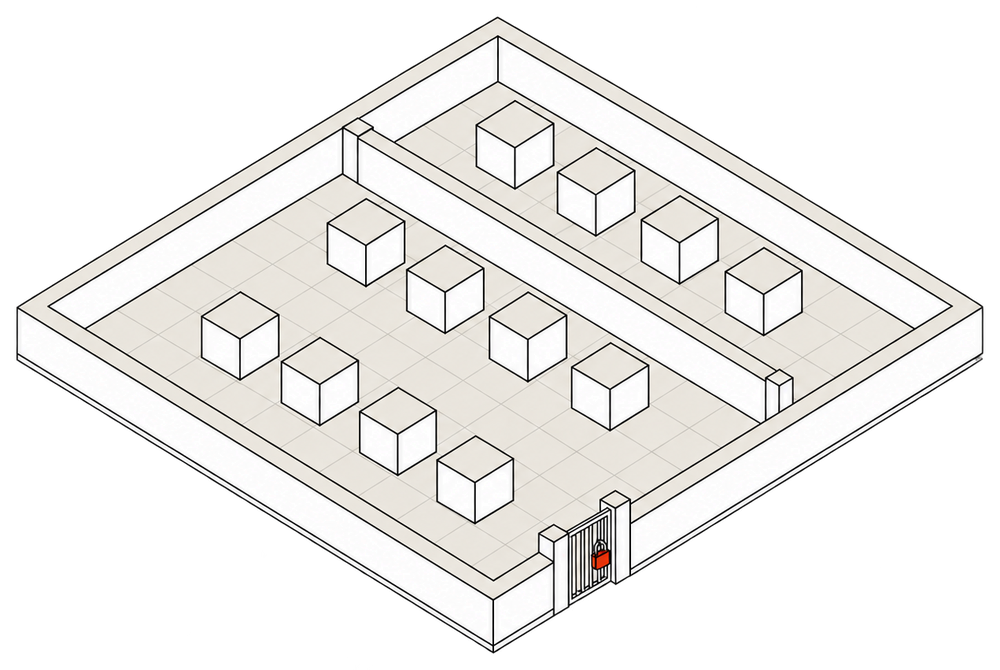
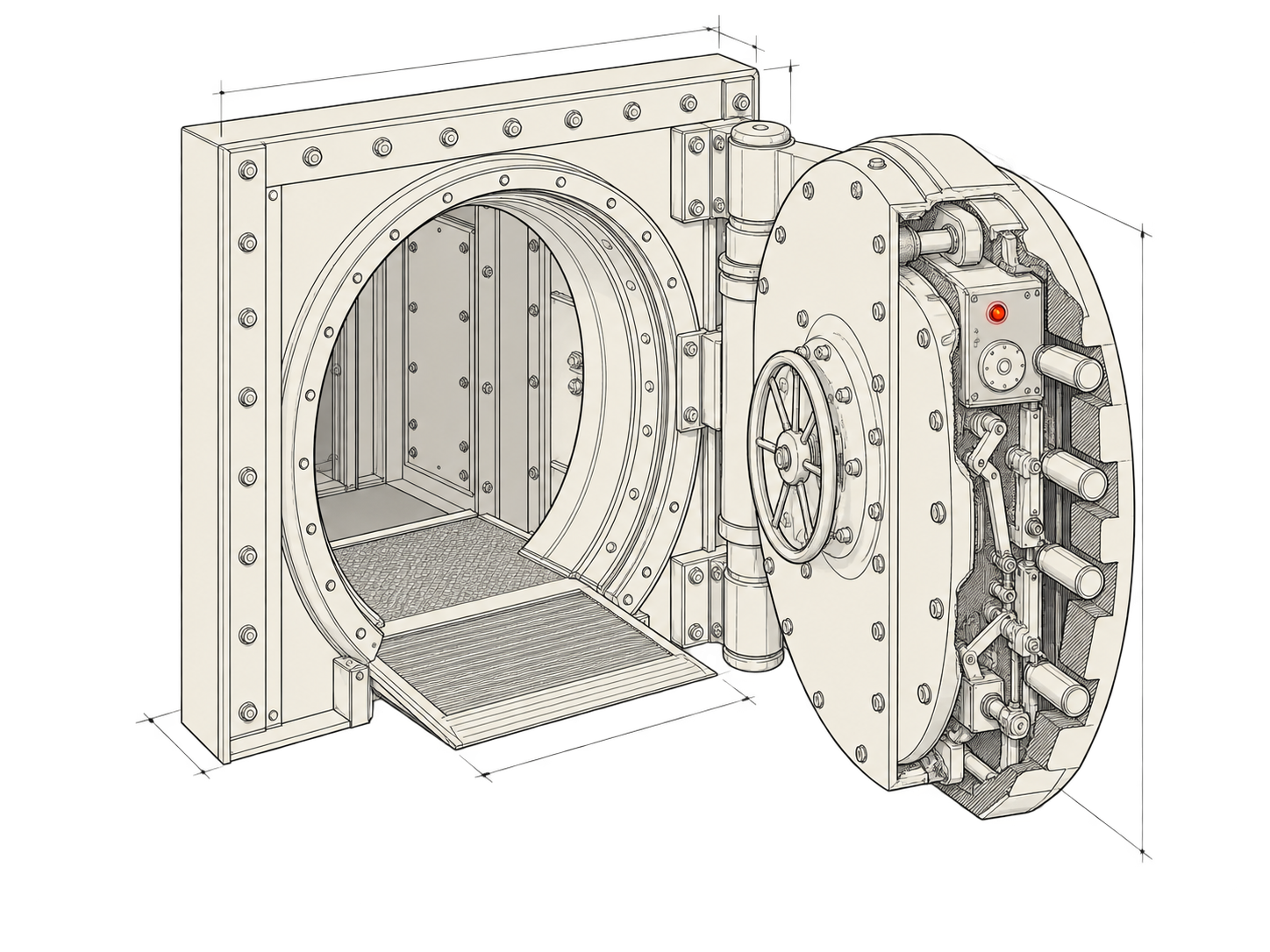
One access model compiled into every query, agent and API call, on a hash-chained audit record
- Caller
- The person a request runs as. An agent never exceeds its person
- Access labels
- A type can require a label the reader must hold, such as Safety or Commercial
- Row policies
- Attribute-based row filters. A row must pass every policy on its type
- Hidden properties
- Removed for the groups they are hidden from, including inside counts and sums
- Audit
- Append-only SHA-256 hash chain with signed checkpoints
- Sign-on
- OpenID Connect with PKCE. SAML 2.0 On request
- Directory
- SCIM 2.0 from Entra ID, Okta and Google. A deactivated person is refused on the next request
- Erasure
- PIPEDA and Quebec Law 25 requests, with a second officer’s approval
accessLabels:
  - { id: SAFETY, name: Safety reports }
  - { id: COMMERCIAL, name: Commercial and costs }
users:
  - { id: mc.lee, name: Dana Lee, groups: [maintenance-control],
      accessLabels: [SAFETY, COMMERCIAL], attributes: { stations: ['*'] } }
objectTypes:
  work-order:
    rowPolicy: { property: station, attribute: stations }   # rows limited to the reader's stations
  part:
    properties:
      unitCost: { type: double, unit: CAD, hiddenFrom: [line-technicians, auditors, operations] }
-- Each audit entry carries the SHA-256 of the one before it,
-- so any later change to the history breaks the chain
SELECT seq, occurred_at, event_type, actor_name, agent, prev_hash, hash
FROM ops.audit_events
ORDER BY seq DESC
LIMIT 5;Runtime and deployment
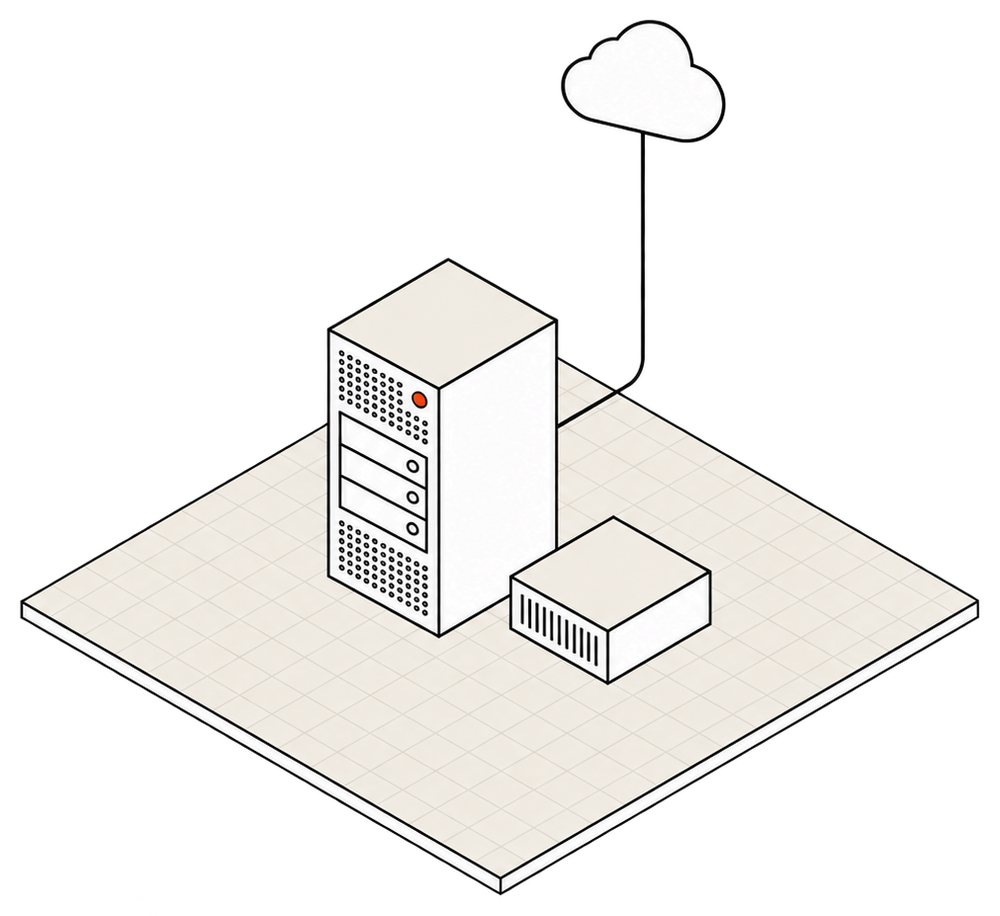
One Python service over the lake, in Canadian cloud regions, with edge agents on the plant network
- Service
- Python and FastAPI over the lake, one REST API, typed Python and TypeScript clients
- Edge agents
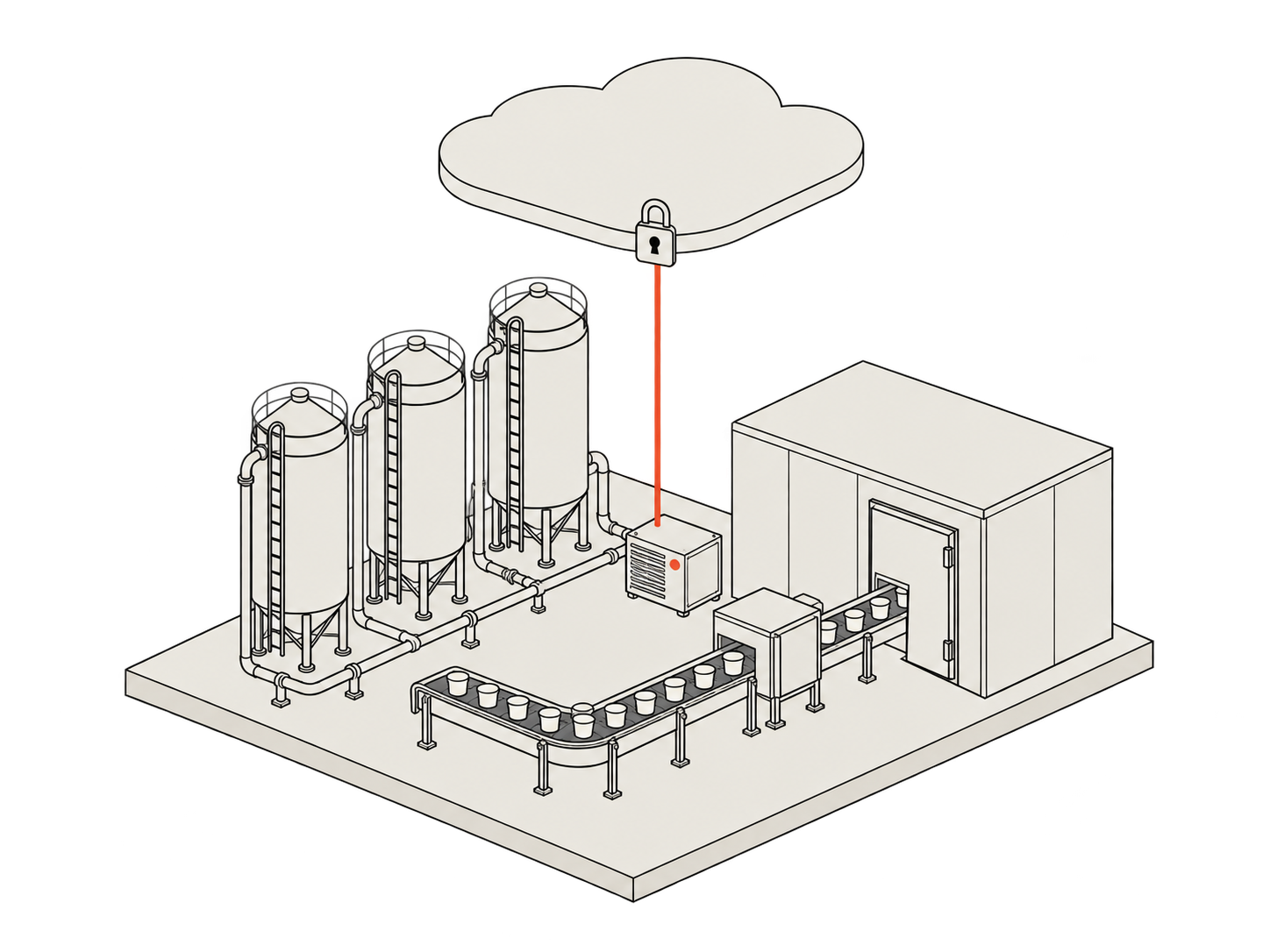
- OPC UA, MQTT and Modbus on the plant network. Signed, outbound-only, with an on-disk outbox
- Copies
- Several copies on one lake, with commits, approvals and budgets consistent across them
- Monitoring
- Prometheus metrics, JSON logs and OpenTelemetry traces for your own monitoring tools
- Cloud
- AWS in Montréal, set up with Terraform
- On-premises
- Your servers, run by our team On request
One decision, end to end
Wind closes the causeway to trucks. Every service the decision touches, with target timings
Why the usual tools stop short
Each is good at its job. None is a model you can act on, govern and audit
| Markland Street Ontology | Dashboards and BI | Integration platforms | A data lake you build | A chat assistant | |
|---|---|---|---|---|---|
| Live model of objects and links | Yestyped, versioned, branchable | Notables and charts | Nomoves records | If you build it | No |
| Act and write back | Yestransactional actions, outbox | Noread-only | Partlyflows, no model | No | Partlywithout guarantees |
| Permissions through links and aggregates | Yesrow, property, access label | Per report | No | Table-level | No |
| Agents with traces and evaluations | Yesevery step, every release | No | No | No | Logs only |
| Plant floor and offline sites | Yesedge agents on the plant network | No | Some | If you build it | No |
| Open data you can leave with | YesDelta Lake in your storage | Exports | Varies | Yes | No |
| Screens the floor will use | Yesbuilt with your team | For analysts | No | No | Chat only |
Categories, not products
Built on open standards
Open formats and protocols wherever one exists, so you could run your data without us
Data
- Tables
- Delta Lake on Parquet
- Compute
- Apache Spark, DuckDB
- Catalogue
- Unity Catalog, open source
- Branches
- lakeFS
- Sharing
- Delta Sharing
- Models
- MLflow registry
Runtime
- Service
- Python, FastAPI
- Functions
- Python and TypeScript, in the ontology folder
- Changes
- Delta change data feed
- Optional servers
- Docker Compose
- Scale-out
- Kubernetes On request
Security, sign-on and audit
- Identity
- OpenID Connect, SCIM 2.0; SAML 2.0 On request
- Transport
- TLS 1.2 and 1.3, mutual TLS at the edge
- At rest
- AES-256, your keys
- Keys
- AWS KMS; Azure Key Vault, GCP KMS, HSM On request
- Audit
- SHA-256 hash chain
- API
- OAuth 2.0 with PKCE
How we engineer
Read the documentation
How we build and run your implementation, from object storage to the error codes